Gourav · Founder, Alpha Concrete
30 November 2022
Technical, Mix Design
Why M60 Concrete Requires More Than a Good Mix Design
At Alpha Concrete, we produce concrete from M10 to M60. M60 is our technical benchmark — the grade that demands precision at every stage and tolerates nothing
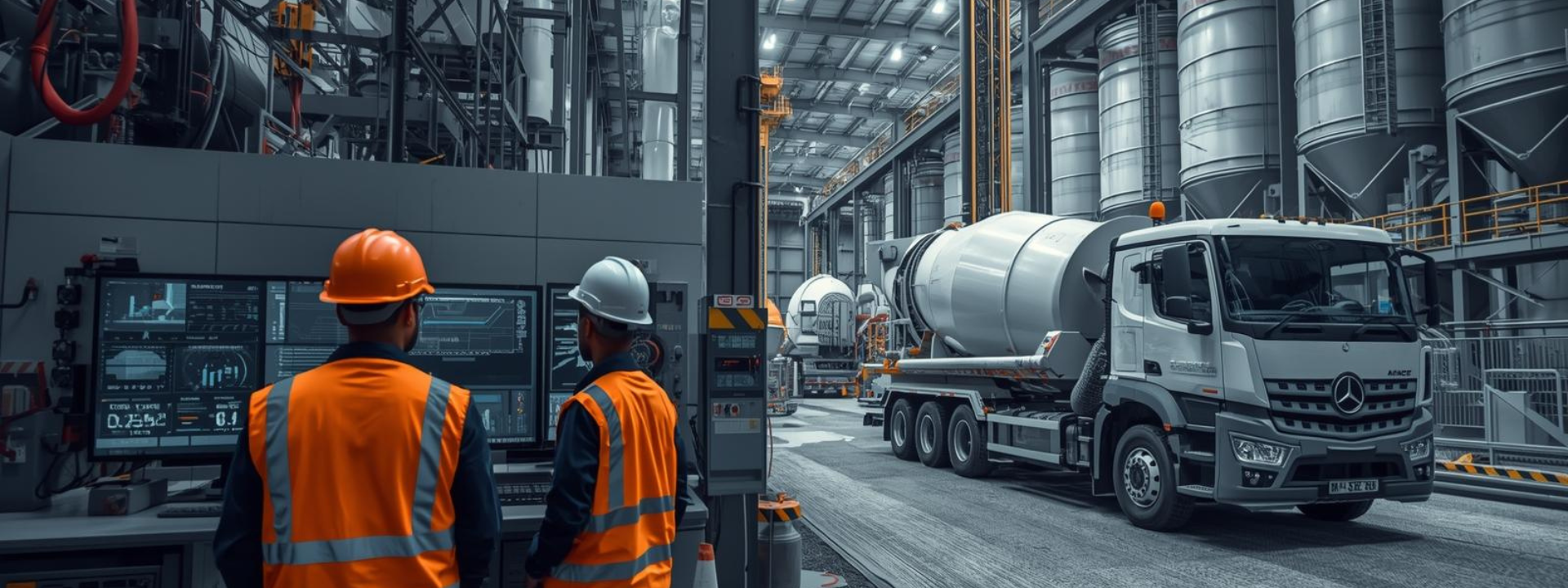
If you ask most Ready Mix Concrete suppliers in Bangalore what their highest grade is, you'll hear M40. A few will say M45. M60 is a different conversation entirely — and that gap is not just about cement content.
At Alpha Concrete, we produce concrete from M10 to M60. M60 is our technical benchmark — the grade that demands precision at every stage and tolerates nothing. Here is what producing M60 reliably actually requires.
The Water-Cement Ratio Problem
At M60, the target water-cement ratio is typically between 0.28 and 0.35 — significantly lower than the 0.45–0.55 used in standard M25 or M30 mixes. At this level, a 0.03 deviation in the effective w/c ratio can cost 5–6 MPa in 28-day strength.
The most common cause of w/c ratio deviation in RMC plants is aggregate moisture — specifically, the moisture already present in the aggregate stockpile that most plants don't measure before batching. If your 20mm aggregate has absorbed rain overnight and has 3% moisture instead of the assumed 0.5%, your concrete is arriving at the site wetter than designed. It looks fine. The slump is good. But at 28 days, the cube test disappoints.
Alpha uses moisture sensors in aggregate bins. Before every M60 batch, the moisture reading is fed directly into the mix calculation. The added water is adjusted automatically. The effective w/c ratio is protected — every batch, every time.
Temperature Control in Bangalore Summers
Fresh concrete begins to lose workability rapidly above 30°C. In Bangalore's summer months, ambient temperatures between 35–40°C mean that standard batching can produce concrete that arrives at a site already stiffening — before the pump has even set up.
For M60, where workability loss before placement can cause cold joints, inadequate compaction, and strength reduction, temperature management is non-negotiable. Alpha's system monitors ambient and aggregate temperatures, calculates predicted discharge temperature, and automatically triggers chilled water addition, ice protocols, and reduced transit time limits when thresholds are approached.
High-Performance Admixtures — Getting the Dosage Right
M60 requires high-range water reducers (superplasticizers) and often silica fume or GGBS to achieve the target strength at a low w/c ratio. Admixture dosage is not fixed — it varies with aggregate surface texture, ambient temperature, and the specific cement-SCM combination in use.
Our mix designs are not copied from a design guide. They were developed through trial mixes using our specific aggregate sources, tested across temperature ranges, and validated before live production began. Every M60 pour at Alpha is backed by a documented mix design, approved trial mix results, and a batch record that our quality team can trace.
Why This Matters for Your Project
If you are specifying M60 for bridge elements, high-rise core walls, or critical transfer structures — the question to ask your RMC supplier is not 'Can you produce M60?' It is: 'Show me your trial mix results. Show me your moisture correction protocol. Show me your temperature management procedure.'
If they cannot answer those questions, they are producing M60 in name only.
Need M60 or high-strength concrete for your project? Talk to our technical team.
Contact Us