Gourav · Founder, Alpha Concrete
30 November 2024
Business , Technology, RMC Industry
SCC — Self-Compacting Concrete: When to Use It and What It Demands
Self-Compacting Concrete — SCC — is one of the most technically demanding mixes in construction. It is also one of the most misunderstood. Many contractors specify it without fully understanding what it requires from the RMC supplier, and many RMC suppliers claim to produce it without truly having the mix design calibrated.
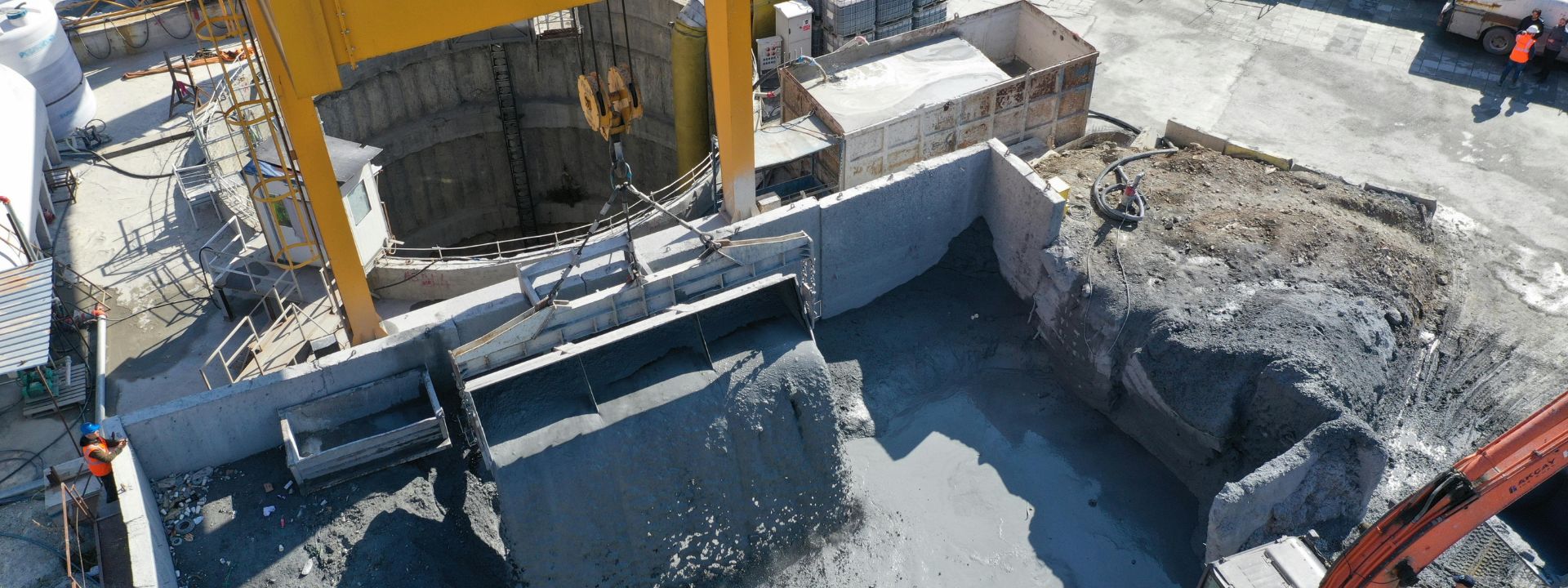
At Alpha Concrete, SCC is a grade category we have produced for demanding structural applications. Here is what you need to know about when to use it and what it actually requires to get right.
What Makes SCC Different
Standard concrete requires mechanical vibration to consolidate — a vibrator is inserted into the fresh concrete to release air and ensure the mix fills the formwork completely. SCC eliminates this requirement entirely. It flows under its own weight, passes through congested reinforcement without segregation, and self-levels to a uniform surface finish.
The benefits are significant: SCC can reach zones where vibrator access is difficult or impossible, reduces site labour requirements, and can produce superior architectural surface finishes. It is specified for congested column cages, post-tensioned slabs, architectural concrete elements, and complex formwork geometries.
What SCC Demands from the Mix Design
SCC's behaviour depends on a precise balance between three properties: flowability, passing ability, and segregation resistance. Getting all three simultaneously is technically demanding.
• Flowability is achieved through high dosages of superplasticizer (high-range water reducer). Too little and the mix won't flow. Too much and it becomes unstable.
• Segregation resistance requires a Viscosity Modifying Agent (VMA) — an admixture that prevents the coarse aggregate from separating from the paste during flow. The VMA dosage must be balanced against the superplasticizer to avoid stiffening the mix.
• Passing ability depends on the aggregate sizing and gradation. SCC typically uses a reduced coarse aggregate content and a carefully graded sand to allow the mix to pass through reinforcement bars without blockage.
This balance is not achievable from a design guide alone. It requires trial mixes, flow table tests, J-ring tests, and V-funnel testing — all conducted with your specific aggregate sources and cement combination. At Alpha, every SCC grade is validated through this process before live production.
When to Specify SCC
• Deep column sections with congested cage reinforcement where vibrator access is restricted
• Architectural concrete where surface finish quality is critical and vibration marks are unacceptable
• Tunnel linings and underground structures with limited pour access
• Post-tensioned flat slabs where duct congestion limits vibration paths
• Precast elements requiring precise surface quality
What to Ask Your RMC Supplier
Before specifying SCC, ask your RMC supplier for their SCC mix design, their trial mix test results (slump flow, T50, J-ring, V-funnel), and their on-site fresh concrete testing protocol. If they cannot produce these, they are not producing true SCC — they are producing a very wet standard mix and calling it SCC. The difference at 28 days will show up in your cube tests.